
Welcome to the Breakfast Club, your weekly dose of market insights and trading strategies! Join us live every week at 9 AM ET on Traders Reserve Live, where John Hutchinson breaks down the latest market movements, shares actionable trade ideas, and answers your most pressing questions.
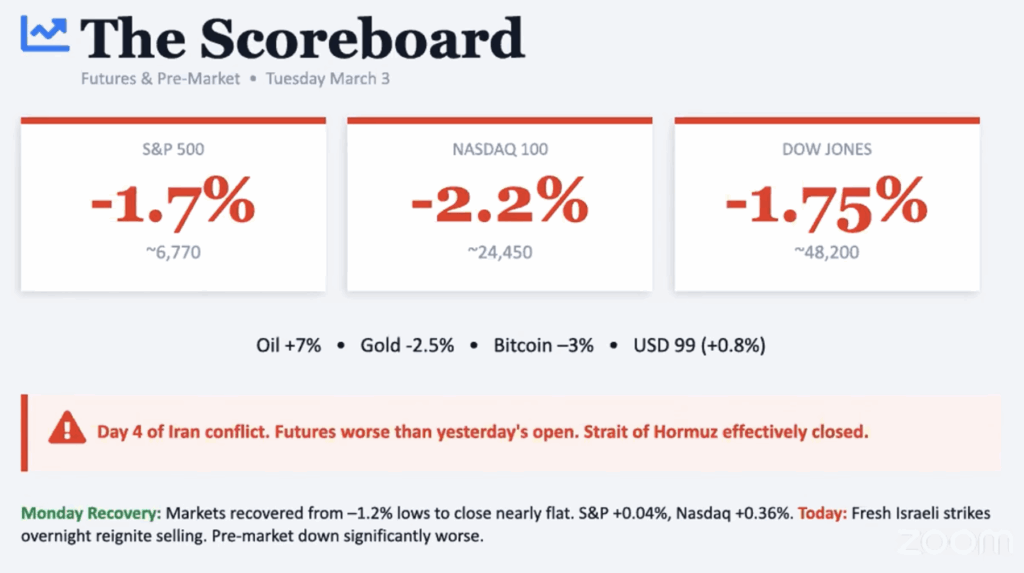
Tuesday morning, I told our Breakfast Club members to go play golf. Have lunch with a friend. Watch the entire Lord of the Rings trilogy—that’s a good 8 or 9 hours, and it’ll get you to the closing bell. Because this market was not going to open in a positive way.
But here’s what most people are missing: this isn’t just about Iran. This is about an avalanche of events that are converging at the same time, squeezing the market from multiple directions— and the picture that’s emerging is one that Wall Street was not prepared for.
The Only Thing Wall Street Cares About
Let’s be clear. As it relates to the Iran conflict, the market cares about one thing: oil. That’s it. Not the geopolitics, not the humanitarian concerns—Wall Street is laser-focused on what happens to the price of crude.
And what’s changed in the last 48 hours is significant. Over the weekend, we had a defined framework: 4 weeks of air operations, no boots on the ground. Even Lindsey Graham said it. Clean. Limited. Predictable. Wall Street could price that.
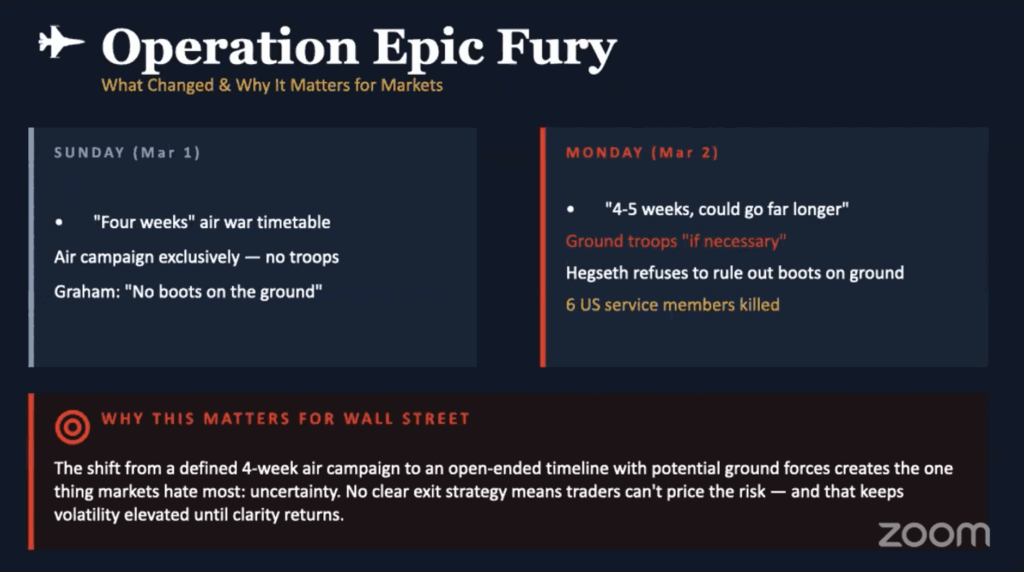
Then Monday happened. Between President Trump, Defense Secretary Hegseth, and others, the messaging shifted. Maybe 4 weeks. Maybe 5. Maybe longer. Troops? Probably not, but maybe. That single word—maybe—is what’s killing this market. Because “maybe” means there’s no exit strategy. And if there’s no exit strategy, Wall Street can’t price the real risk to the oil market.
The Strait of Hormuz Problem
Iran is threatening any ship attempting to pass through the Strait of Hormuz. That alone would move oil prices. But here’s where it turns into a full-blown avalanche.
Major insurers—the companies that back global shipping—are now electing their war indemnity clauses. In plain English: if your ship gets attacked, we’re not paying the claim. So what are ship captains doing right now? The same thing I told you to do this morning. They’re doing anything except transiting the Strait of Hormuz.
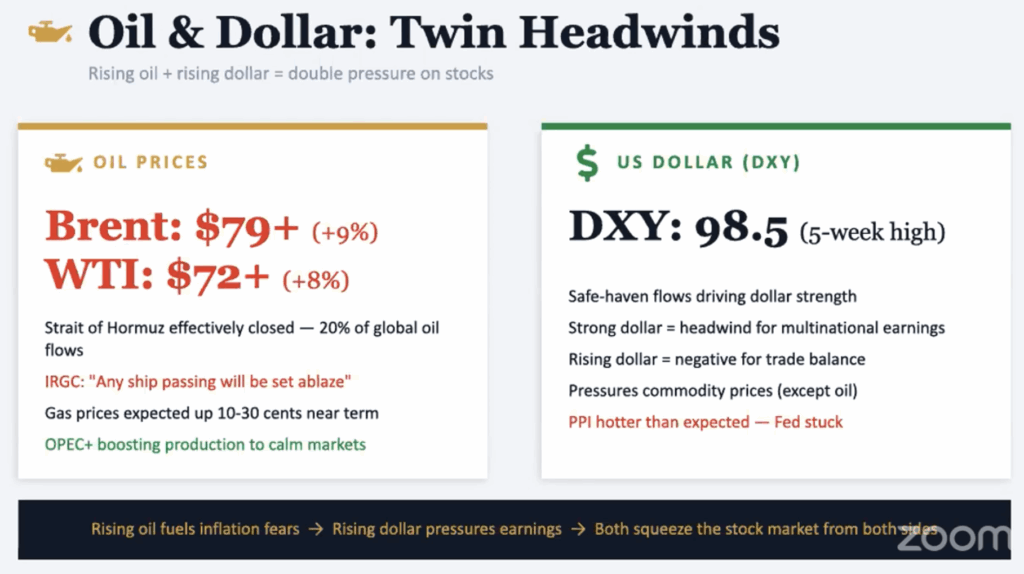
That’s not just a threat. That’s a blockade in practice—and it’s one of the key reasons the markets opened deeper in the red than yesterday, by almost a full percentage point.
The Squeeze No One Expected
Now layer in what’s happening on the economic side, because this is where it gets uncomfortable.
Friday’s Producer Price Index surprised significantly to the upside. That’s price inflation at the producer level, and at some point, that rolls down to consumers. Then Monday, the ISM manufacturing report: overall manufacturing printed in expansion territory for the second consecutive month—that’s the good news. The bad news? Prices paid surged to their highest level since June 2022. That’s the highest reading since last year’s tariff implementations.
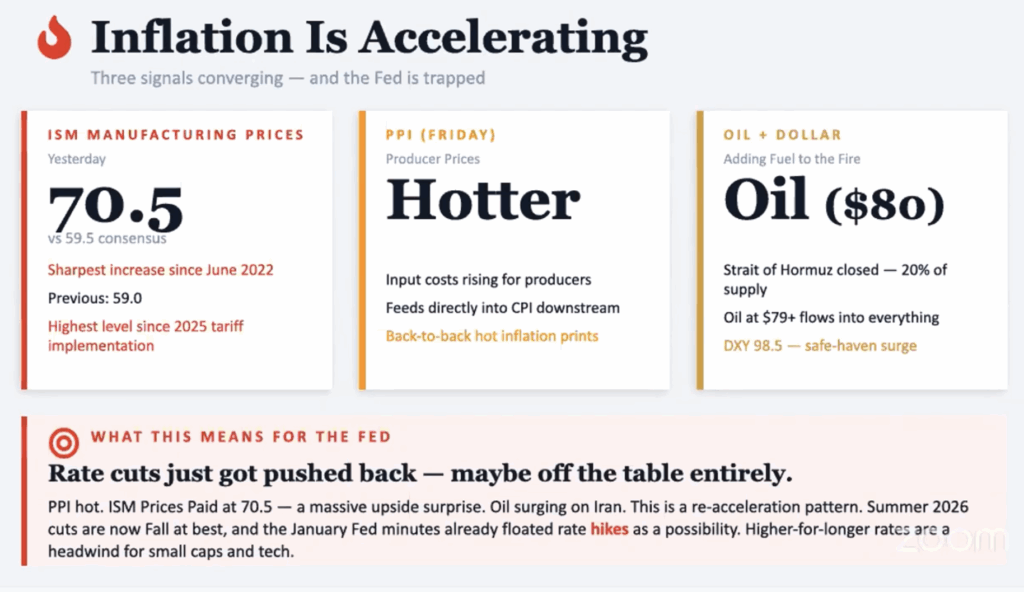
Now put the pieces together: PPI running hot. Prices paid at levels we haven’t seen in years. Oil surging 7–8%. The US dollar climbing back toward 100, which pressures trade, hurts multinational earnings, and becomes a safe haven alternative to stocks. And retail sales already came in flat last month.
These forces are squeezing the stock market from two different sides. And when you add in oil—which impacts not just consumers but the cost of moving goods and services globally—that puts enormous pressure on the Federal Reserve.
I’ll go on record: rate cuts are off the table for March. That’s certain. And if the Iran conflict extends beyond 4 or 5 weeks, I don’t see how the Fed gets back to rate cuts by summer.
The Starting Point, Not the Panic Point
I want to be clear about something: I’m not using the R word. Not yet. This is a collection of events. Inflationary pressures can alleviate quickly—they can pull back just as fast as they expanded. If this is a short war, oil prices will come down. If retail sales show consumers are still spending, GDP holds.
But this is the point at which you start to pay attention. Not the point at which you take drastic action—the point at which you understand how the dots are connecting, and prepare accordingly.
Because if this conflict bleeds into April and May, you’re heading straight into spring and summer travel season with elevated oil prices, and that’s going to hit consumers in a way that shows up in the data. We need 2 to 3 months of validating prints before anyone should be reaching for the panic button. But the dominoes are starting to line up.
Where the Opportunities Are
Even in a red tape day, not everything bleeds. Yesterday, Coherent was up 15%, Tower Semiconductor up 10%, and Aerovironment up 10% inside our AI2 portfolio. The Nasdaq and Russell both wiped out their losses within the first hour and a half of trading.
The area I’m watching most closely right now is the intersection of artificial intelligence and defense. When defense stocks get used up, they have to be replenished—missiles, missile components, semiconductors, memory, drones, satellites, the entire defense network. And that replenishment cycle is where AI meets real-world demand.
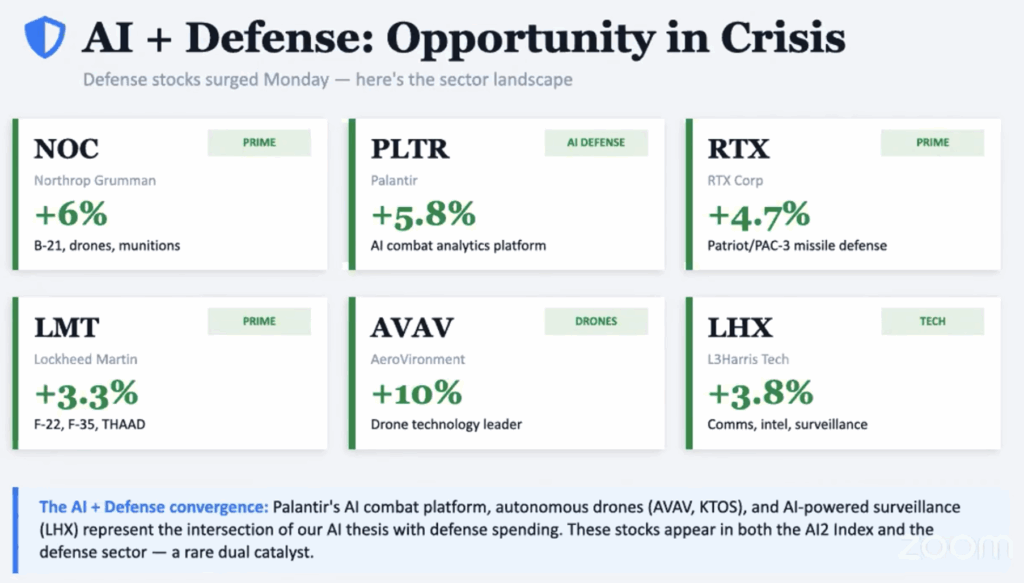
Six companies sit at the center of that thesis: Northrop Grumman, Palantir, RTX, Lockheed Martin, Aerovironment, and L3 Harris. All had strong days yesterday. All have solid fundamentals. And several—particularly Aerovironment and Kratos Defense—offer the kind of volatility that short-term traders thrive on.
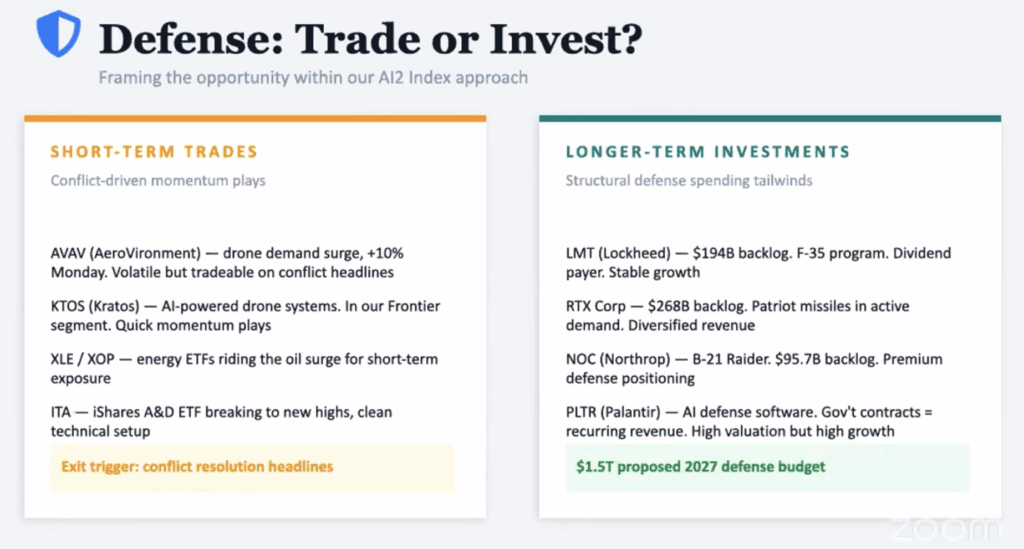
For longer-term holds, Lockheed Martin, RTX, and Northrop Grumman have been building strong charts on the back of expanded defense budgets. These aren’t stocks I see collapsing. A pullback gives you a better entry. Energy ETFs like XLE and XOP should also ride the oil wave higher in the short term, and ITA offers broad defense sector exposure.
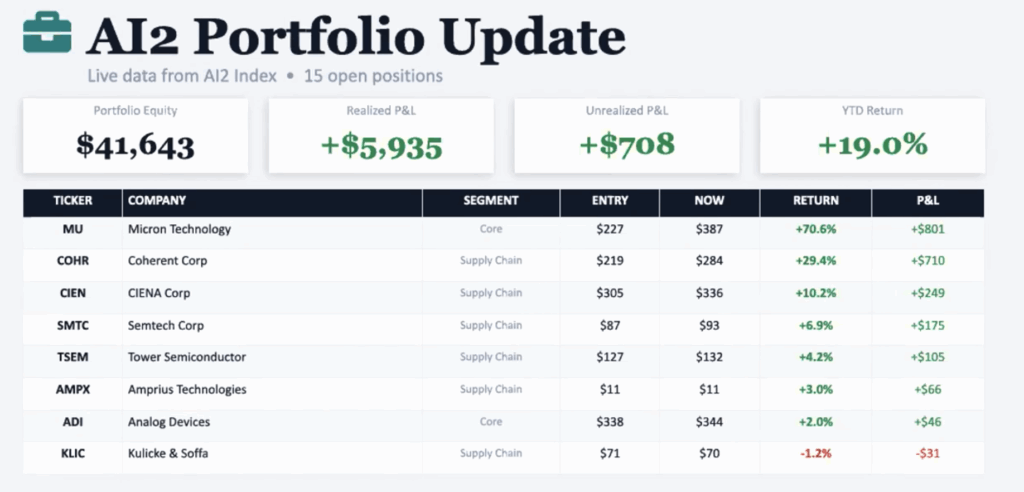
The market is going to find a bottom. It always does. And when it does, I’ll be looking to add to positions, reduce cost basis, and expand into new names across AI, defense, optics, connectivity, and security software.
The key right now isn’t to panic. It’s to understand why the market is doing what it’s doing, where the pressure is coming from, and where the opportunities will emerge when the dust settles.
Hang in there.
Disclosure: AI2 Insiders holds positions in stocks mentioned in this article. Past performance does not guarantee future results. All investments carry risk.
See What’s Coming at the AI Wealth Conference
I recorded a quick breakdown of the three strategies we’re bringing to Investor’s Blueprint Live on March 20-21 — and the results they’ve already produced this year. Eight minutes. Real numbers. No fluff.