

Welcome to the Breakfast Club, your weekly dose of market insights and trading strategies! Join us live every Monday and Wednesday at 8:30 AM ET on Traders Reserve Live, where our experts break down the latest market movements, share actionable trade ideas, and answer your most pressing questions.
Everyone’s calling it a bubble — but the numbers tell a very different story.
When the Bank of England warned that AI valuations had reached “disastrous proportions,” it grabbed global headlines.
But before you start selling your AI stocks, let’s look at what’s actually happening under the surface.
In this week’s Breakfast Club, John Hutchinson and Jeff Wood broke down the truth behind the so-called “AI bubble” — comparing it to the dot-com era and showing why this market may just be getting started.
What the Bank of England Missed
The Bank of England made a similar call back in 2000 — just before the dot-com crash.
They were right for a moment, but long term? They missed the story completely.
The internet didn’t die — it evolved. And that same logic applies here.
Artificial intelligence isn’t speculation; it’s a structural revolution being built on the backs of profitable, established companies.
The Core Issue: Fundamentals vs. Fear
AI enthusiasm is driving markets higher — but that’s not necessarily a bad thing.
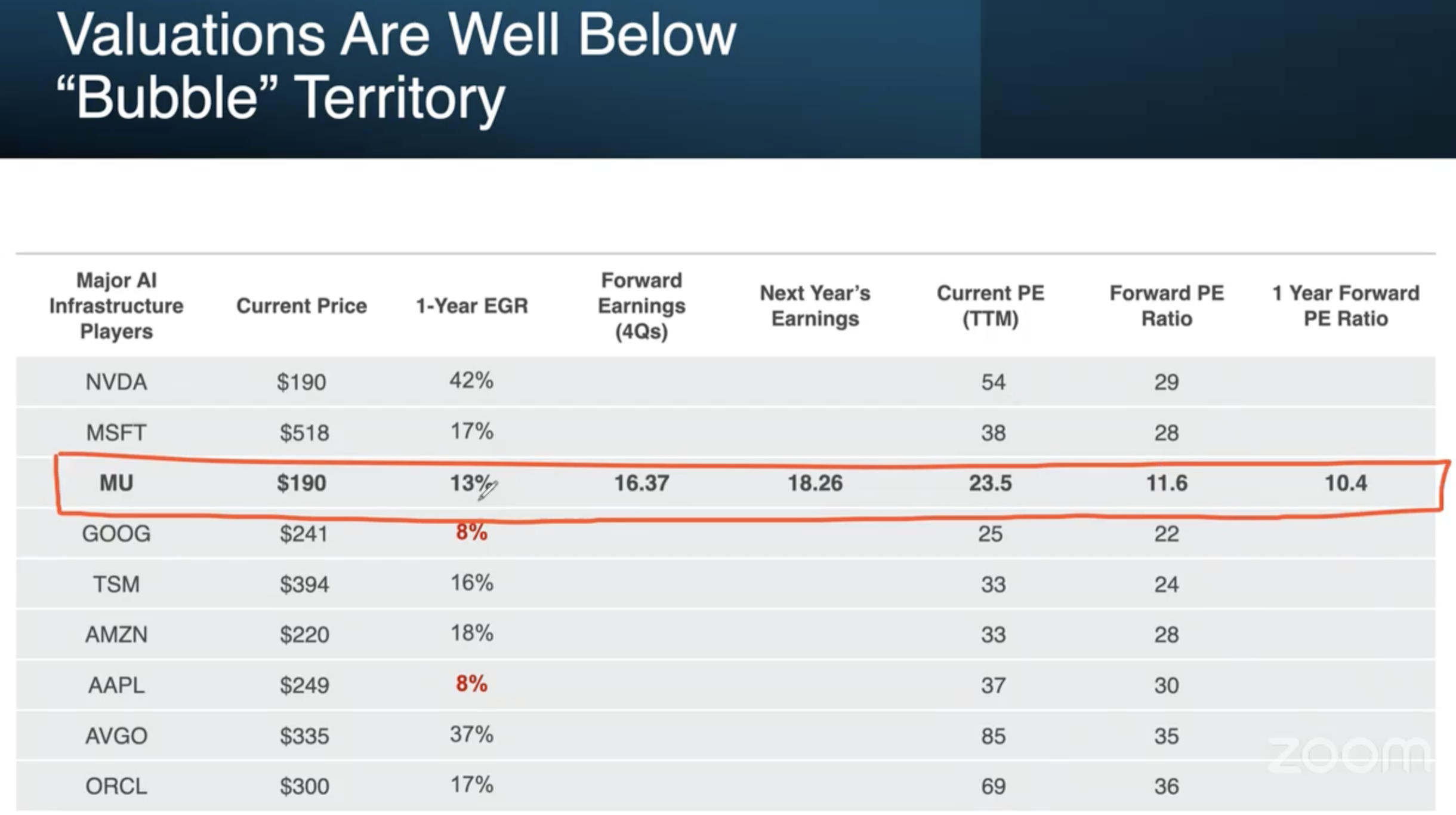
What matters is why prices are rising. Unlike the dot-com days, today’s AI leaders — Nvidia, Microsoft, AMD, Micron, and Taiwan Semiconductor — already produce substantial revenue and earnings.
The real danger isn’t that AI is overvalued; it’s that investors forget to separate hype from fundamentals.
Data That Tells a Different Story
The numbers tell a clearer story than the headlines.
Across the AI² Index — more than 150 tracked companies — the average forward P/E ratio is around 32.5x. That’s elevated, but nowhere near the 150–200x valuations that marked the true bubble of 1999–2000.
The AI Infrastructure Advantage
AI’s growth is being driven by infrastructure, not speculation.
Chips, cloud capacity, and data centers form the backbone of the current expansion, supported by companies that are scaling profits rather than promises.
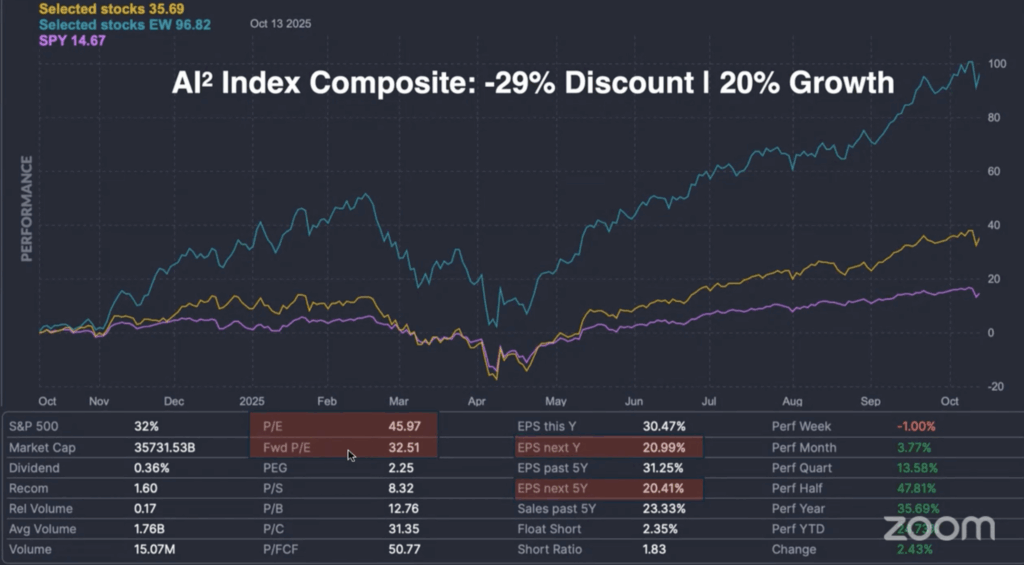
When analyzed together, these companies represent a sector with high growth and improving efficiency, not runaway speculation.
The Market’s Momentary “Tariff Tantrum”
Last Friday’s selloff spooked investors and set off talk of a broader correction.
But most indices remain above long-term moving averages, suggesting continued strength beneath the surface.
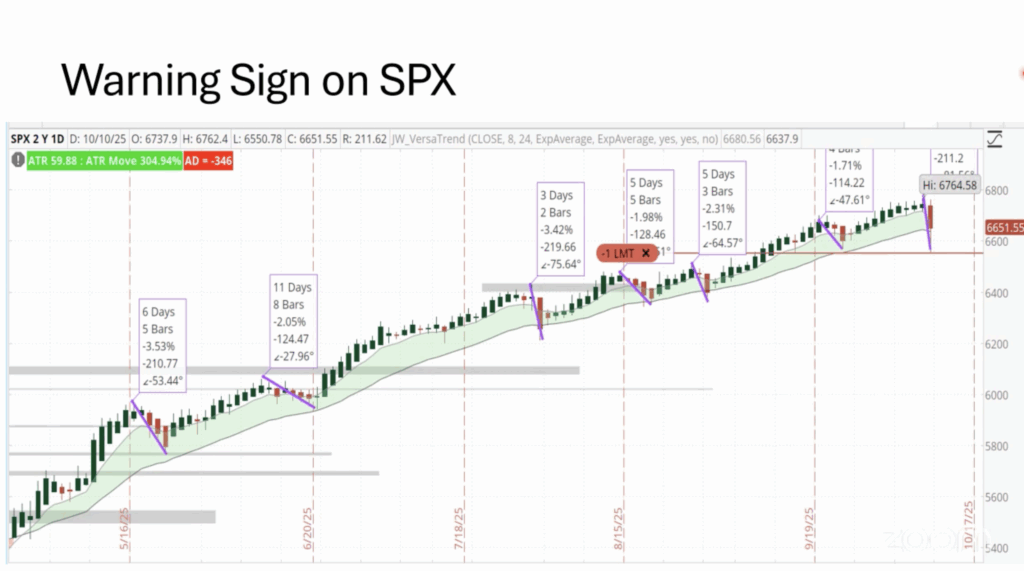
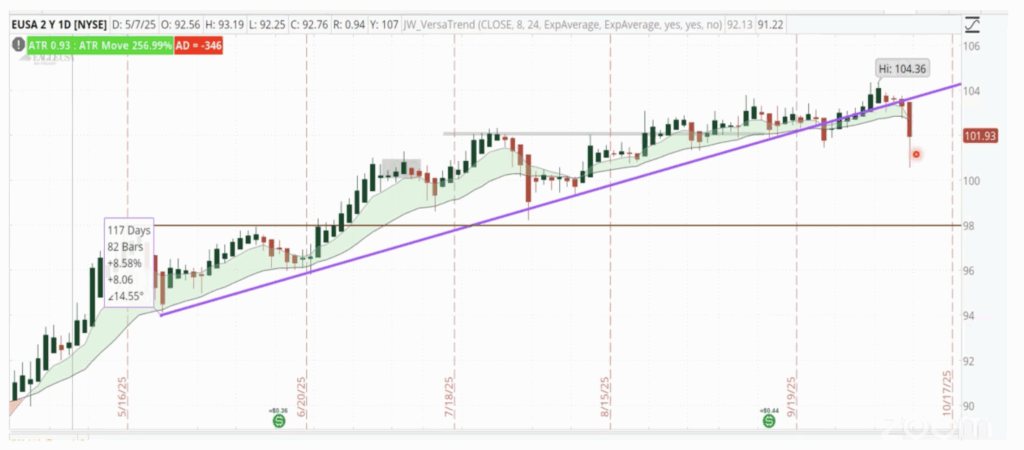
Short-term volatility may continue, but the structural trend points toward stability and selective opportunity.
The Broader Picture
Comparing the data reinforces the point.
During the dot-com years, companies traded at unsustainable multiples with no earnings path.
Today, AI leaders are profitable, expanding, and in many cases, trading at discounts to future growth.
Key Takeaways
Fundamentals matter most. Focus on the numbers, not the noise.
AI is early, not overextended. Valuations reflect growth potential, not mania.
Earnings drive leadership. Revenue-backed companies remain the core of this trend.
Volatility creates opportunity. Short-term weakness can open entry points for long-term investors.
Final Word
The “AI bubble” narrative makes for a compelling headline — but it oversimplifies reality.
Artificial intelligence is in an acceleration phase, not a collapse.
What we’re witnessing is the natural volatility of innovation — with the strongest companies leading a long-term transformation.
The question isn’t if AI will reshape global markets.
It’s how well positioned investors are to capture it.
We’ll be back Wednesday morning at 8:30 AM EST on “Breakfast Club Live” with more market insights. But don’t wait. Watch the full video now to see the strategy in action.
Ready to see how we apply this knowledge to our trades? Join our trading community and get access to the tools, data, and strategies that are helping us win week after week. Join Traders Reserve today.